


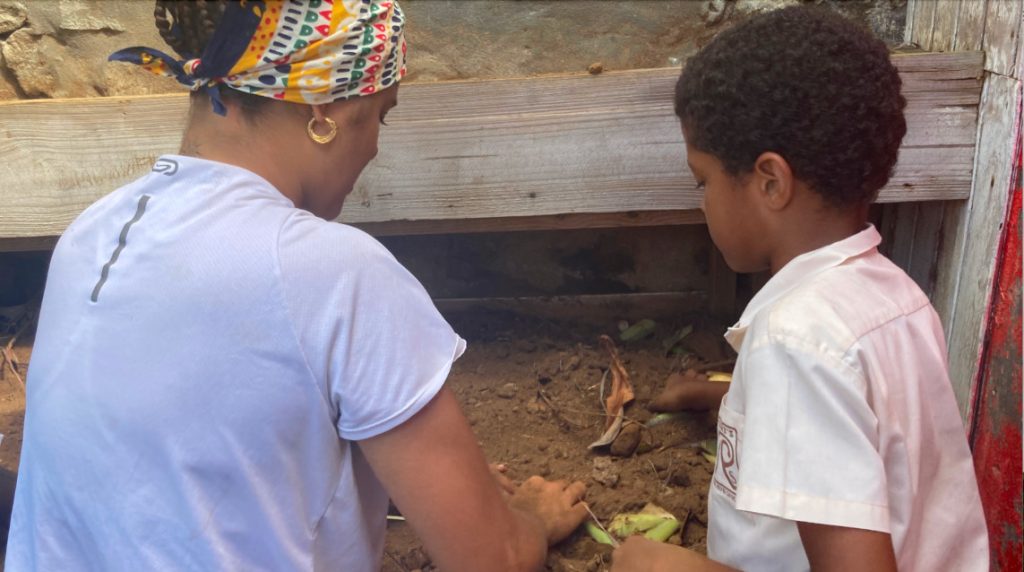
“Living in the Community” is a 2-months period for RVA’s Climate Compliance students and a highlight.
The group has completed two months of theoretical and practical training about climate change, organic farming, permaculture and all the connections and links between them, it is finally time to discover about living on the island, how are the people of St. Vincent, their tradition and lifestyle, and to share with them different knowledge and skills Every day for us was a day full of discoveries of all different kinds: from the food, through the religion, the work, the music, the dialect to the simple way of seeing life. From our side we did our best to transmit the knowledge obtained and deepened during our previous two months and to apply it in the communities.
The village where we lived was Walillabou, nearby Kearton. This place is great from a logistical point of view. We are in a really good, beautiful naturalistic spot, but also close to Kingstown, the capital and commercial centre of the island. We had the opportunity to work in and around the city in several sites: Central Leeward Secondary School in Peter’s Hope, St Mary’s Primary School and Grammar School in Kingstown and we worked with the Salvation Army both in the city and in Buccament.
We spent the first few weeks contacting and explaining our project to the headmasters of the schools in the area and from the first moments we discovered a surprising willingness and interest from almost all the schools, both primary and secondary. We then selected the ones we felt were most in need and closest to us mentioned and we began our exciting journey with them.
They also turned out to be very kind and helpful, for example by offering to give a lift back from the school.
However, the main characters of this story are definitely the students.
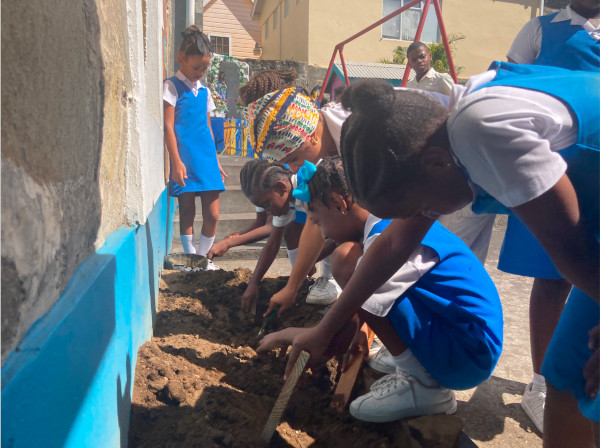
With each class we followed a different path because the students and their learning methods, attention and relationship with each other and with the teachers were quite different. With some classes we didn’t have any problems, everything went easier and faster than expected, with others it was a bit more challenging. We had to find the right balance between teaching, resting, debating and talking with them, using a bit more time. But I think that working with the more challenging classes was important for us because we learned a lot and did our best to adapt and find new teaching strategies.
A characteristic of all the classes was certainly their interest in the new topic we were presenting to them. From the first lesson, which was more general and broader, to the last, which was more practical and strenuous – especially under the strong midday sun – when we established vegetable beds together with the students. The students were active and participated, especially because this topic was mostly new and also directly related to their island and their future. We introduced them to the big topic of climate change with all its links and connections regarding lifestyles, economy and industries of the world. We always tried to let them express their ideas and share habits to reflect together about the actions that each of us should consider.
The relationship between the students and us became positive and strong, based on mutual respect and interest. They were happy to engage with foreigners, coming from distant and different countries, and for this reason we took a lot of time, between one lesson and another, just to talk about places, traditions, ways of saying and doing things.
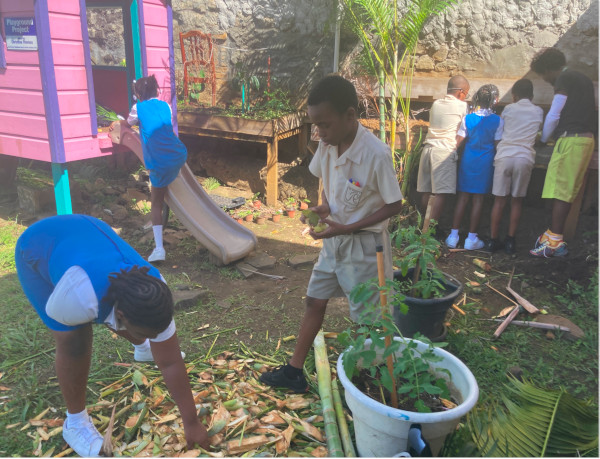
Now, when we are walking in the street or on the beach, we are used to hear “miss!” and we don’t have to turn around to understand that it is one of our students who wants to say hello to us.
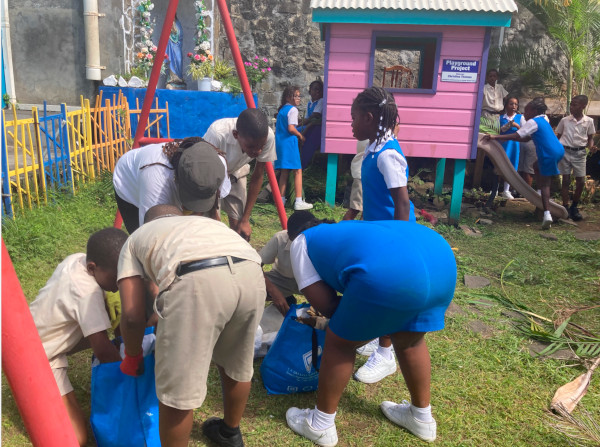
The ambience of the schools impressed me a lot. Here the students, like the teachers, really love the school and it is a safe and peaceful place for them. Most of the studies are done at school and not at home, but school also means a lot of different activities. I understood how they are more advanced from this point of view than how I used to think. In fact, these schools do not only take care of the theoretical knowledge of the students, but also of the practical part. And I’m not just talking about the important agricultural lessons that teach how to be independent and how to use the earth’s resources, but also the emphasis on sports and physical activities.
Working in this environment has been a pleasant experience, based on the combination of teaching and learning, and on trying to sensitize and make the young people aware of this magnificent island and of the world.
Margherita Santel, Italy, November team 2024