


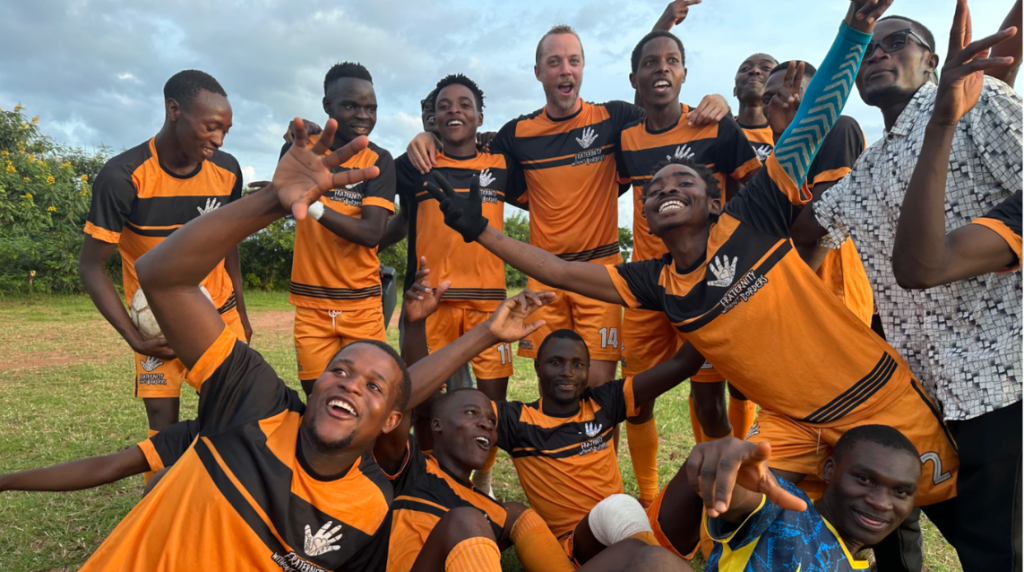
Here comes Mathias Wold, from Norway, Development Instructor at Richmond Vale Academy, volunteering with the October team 2024 in Malawi.
As a Development Instructor for Humana People to People, I underwent training at Richmond Vale Academy in St. Vincent, where I learned how to combat poverty and work alongside those in need. I was assigned to a project in Dowa as a preschool supervisor, where my responsibilities include overseeing preschools, renovating and constructing school buildings, training caregivers, and contributing to improving the financial situation of the communities. This article about a football team I joined shows just one of the many opportunities to engage and interact with the local people.
Arriving in Malawi, one of the first things I noticed was the love they have for football. They often play barefoot on dusty fields, sometimes with a ball made of plastic bags, and the sport is played everywhere. Boys and girls, young and old, all meet at the football field and come together around the sport they love. It quickly became clear to me that football isn’t just a game here, it’s a passion, a form of expression, and a way for people to come together. This inspired me to join a football team.
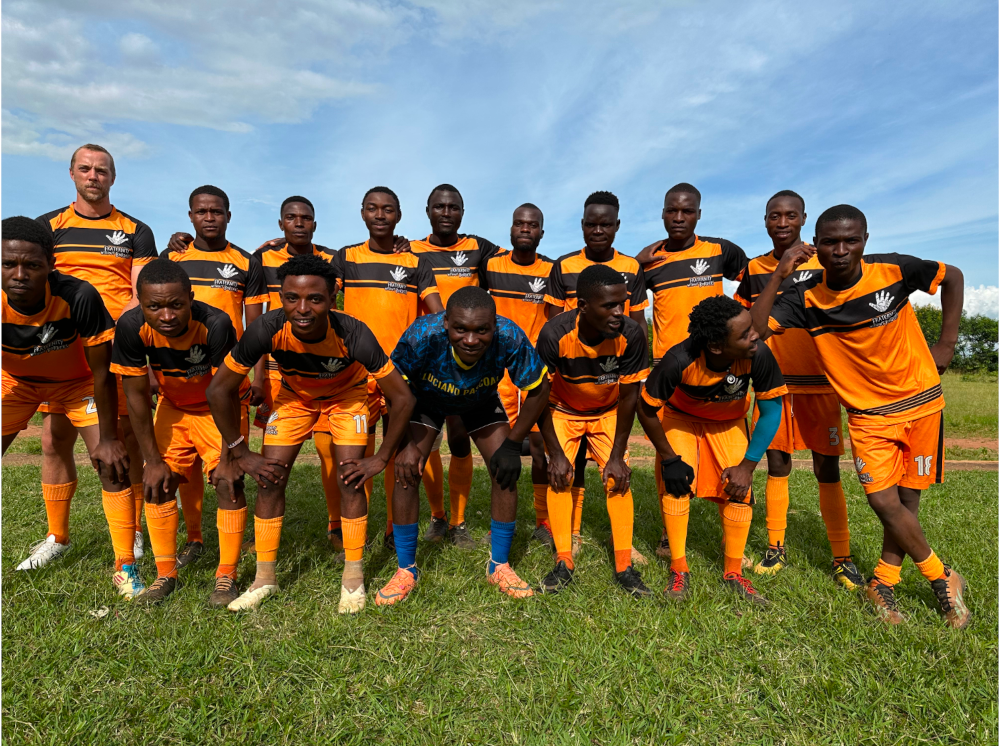
Passion for the team and the sport
For many people in Malawi, and especially in among the refugees in the Dzaleka refugee camp who is our neighbor, opportunities for structured activities outside of school are limited. Poverty, lack of resources, and daily responsibilities at home mean that leisure activities are often a luxury. Yet, football offers more than entertainment; it provides a safe space, teaches teamwork, and builds confidence.
The club I joined is a team with a combination of people who live in the refugee camp, students from the DAPP teacher training college in Dowa, and locals living in the surrounding rural villages. The team is coached by one of the teachers at the college and it has been running for a few years. Some of the players have experience, while others join mainly for the social aspect. However, what stands out is their drive and passion for the sport. These players want to learn, to improve, and to be part of a community with likeminded people.
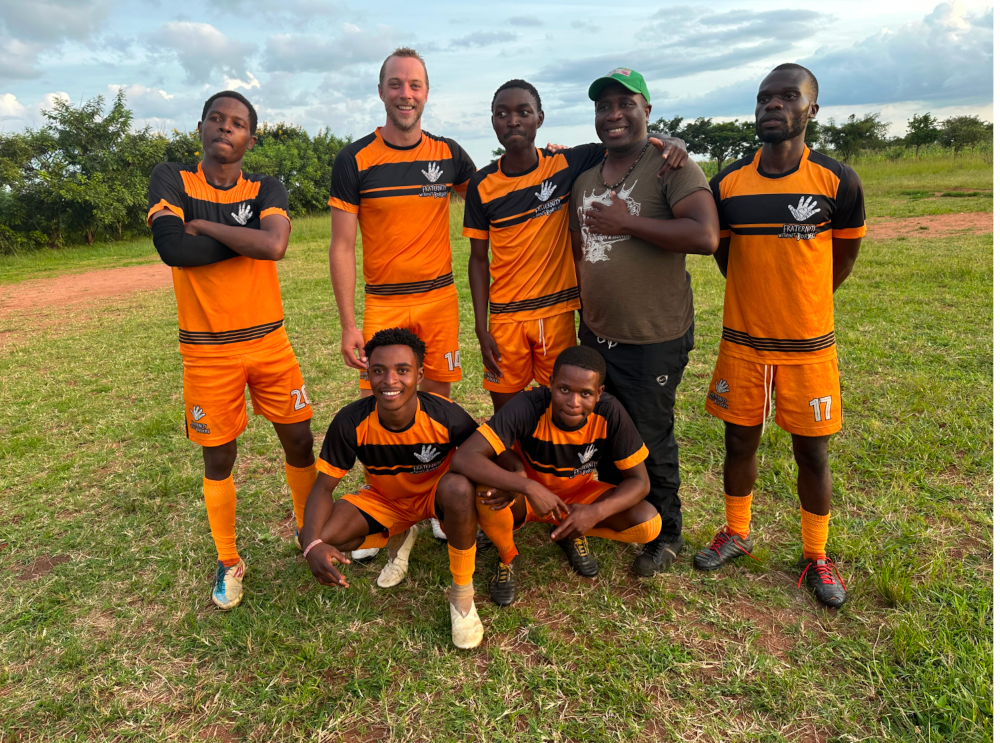
Challenges on the pitch
Playing in a football club in a rural area comes with its own set of challenges. Equipment is scarce, many of the teammates don’t own shoes. The field is uneven, and getting a proper ball and a pump can sometimes be a struggle. But we make it work. A few donated balls, some goalposts built with wood, and a lot of determination keep the game alive.
Another challenge is balancing football and daily tasks, with finding times where the whole team can meet for practice. Some must study for exams. Some need to work at the market to provide for their family, and some are out in the communities building preschools. However, with some flexibility we make it work. Some players show up 30 minutes before practice starts, and some players come 30 minutes before practice is over. The most important is that there is an arena for friends to meet up and enjoy some physical exercise.
Small wins, big impact
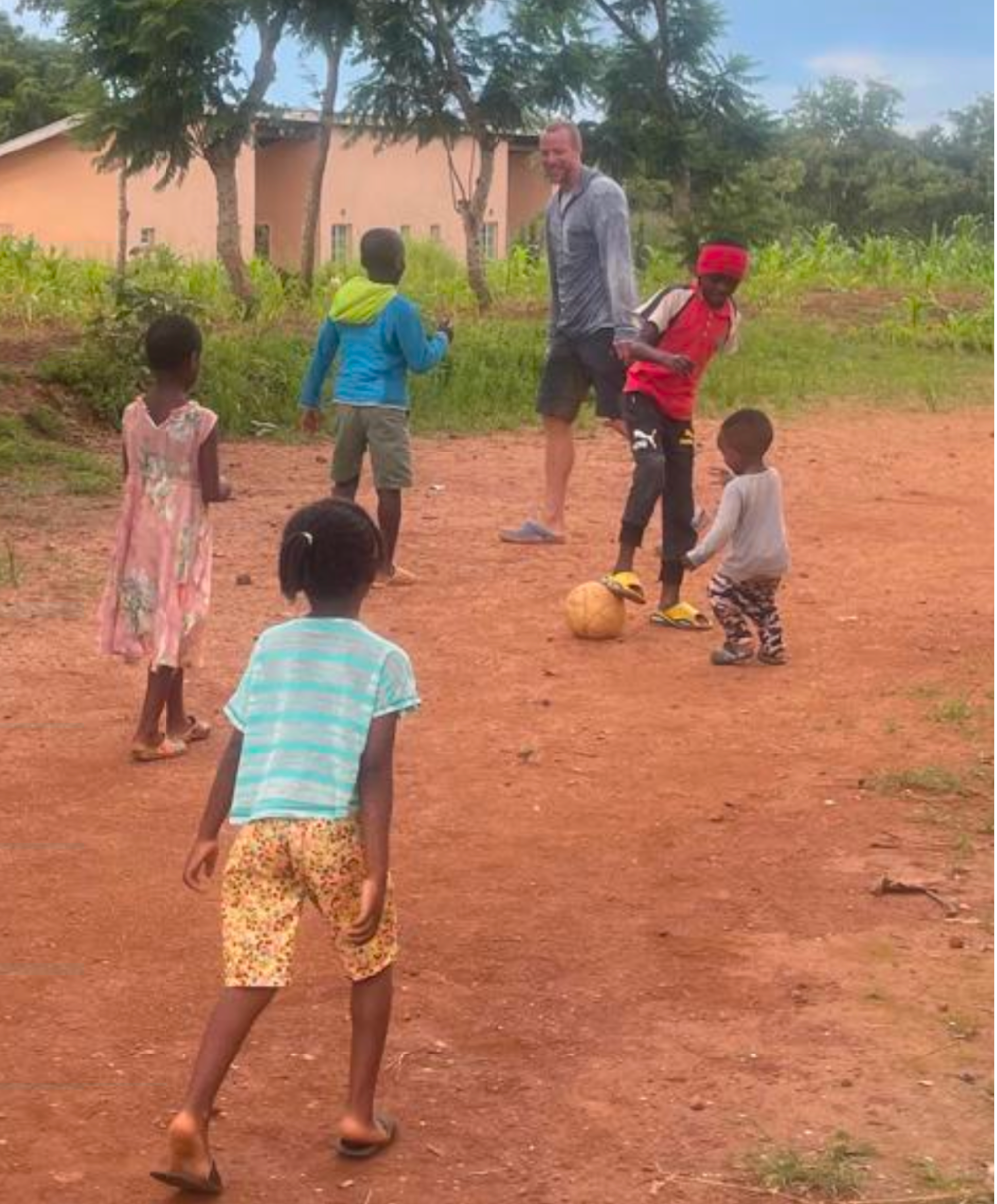
Besides playing in a team, I also play a lot with the children of the teachers at the teachers training college. It didn’t take long before we started making connections. Kids who had been shy and withdrawn began to open up. They support, organize drills, and the older ones are helping younger kids improve. Football in Malawi is not just about football; it is about creating a sense of belonging and community.
One of the most inspiring moments was when we managed to arrange a game against a neighboring village. It was a big event, with a few hundred spectators. Spectators lined the field, cheering on their teams. The excitement, the joy, and the pride on the faces of the players showed just how much this meant to them. Winning or losing didn’t matter – it was about the experience, the opportunity, and the friendships that were formed.