


Expectations vs reality for a student at RVA
Before coming here, I had a very vague, unclear idea of what my life would be like for the next 6 months living in St. Vincent as a student at RVA. In fact, I made it a choice not to read the details of the program and other people’s posts about their experiences living on the island. I wanted to start the program with as few expectations as possible because I’m starting to learn that places and people that are completely new to us never are how we imagine.
To read a person’s personal experience of a place is also very subjective. What defines our experience depends on a lot of different factors and most of the factors we are not able to know beforehand, simply because we haven’t been in this particular environment yet. So what’s the point of creating a lot of expectations that most probably won’t come true?
It’s my philosophy that you will add to a great atmosphere if you are open to learning and going along with how things are done. Then, after you have observed for a good amount of time, you can start to reflect more in depth and make suggestions for changes. With this mindset I feel like I have been able to learn a lot about the challenges of running an NGO, meaningful volunteer work, personal time management and community living, just to name a few things. Most of all, I have gained a new perspective on life about the forces that rule the world, how we are a part of it and how we can challenge the status quo.
So why am I writing this post about my experiences if my advice for you is not to read previous student’s experiences? Because you probably will read a lot of reviews anyway. It is understandable that we would like to have a feeling of the place that will be our life for the next period and that we’ll invest a lot of time, energy and money into. Therefore, my aim is not just to paint a pretty picture of RVA for you. I want to paint a realistic picture that hopefully will give you a better feel of what everyday life is like here.
And how will I do this? During my time at RVA, I’ve heard several students speak about certain expectations they had for their stay at RVA. So for this post I will address some common expectations and try to explain how I perceive RVA life to be like in reality. So let’s begin!
Expectation: I will be working to develop St. Vincent by working most of the time in the community and with locals.
Reality: I will spend a lot of the time in the school working to maintain and develop RVA, especially in the first period. Later in the program, during “Making SVG Climate Compliant”, I will spend more time working directly in the community and together with locals. My final project can also be out in the community.
Let’s clarify further:
The first period is dedicated to studying and absorbing knowledge that you will need in the volunteer work you are doing out in the communities. For our team it included studying climate change and doing a presentation for around 25 children and youth in a church about different themes like protecting marine life, plastic in the ocean and the agriculture industry. The purpose of this first period was for us to be able to explain the effects of climate change to locals that we meet during our time here and why they should get engaged in the fight against climate change.
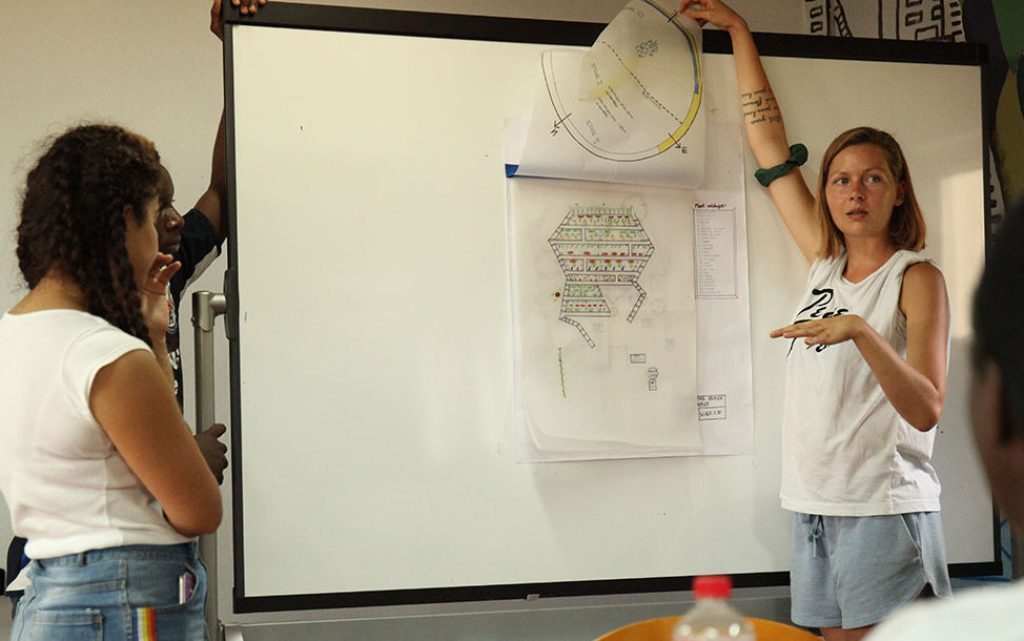
We were also lucky to be the first team to do a Permaculture Design Course (PDC) with a Vincentian as a certified teacher. This course formed the base for our projects of building home gardens during the “Making SVG Climate Compliant” period. We learnt about companion planting, crop rotation and how to build a garden using the natural materials you have available.
Being out in the community also depends a lot on yourself. It’s what you make of it. Slowly you might start to get to know more locals who are working at the school and you might end up being really good friends. A lot of us have gone to Sunday church together, worked on their farms, made roti, callaloo soup or coconut oil and gone fishing.
It’s also important to remember that working in the school doesn’t just benefit RVA. The energy that you put into developing the school are the skills that you will leave with. If you want to gain new skills like using tools, how to build a raft using bamboo and plastic bottles, how to put together a balanced and healthy menu for 50 people, you will have the opportunity to do so if you make it a priority.
Katrine Winther, Denmark
