


What is happiness? Different cultures define and seek it in different ways…
One of the bonus benefits of my RVA experience has been the ability to work closely with a wide variety of people as team members and in the communities. Because this experience happens over a long period of time, it enables us to listen, learn and question our own assumptions along the way, creating a more balanced and flexible perspective on the world as a whole.
As a South Korean, key concepts for happiness include money, honor and achieving authority in your life. My team members would offer different key words, so it makes us step back and ponder what really matters to be happy. Below I would like to share my personal journey while working in Quilombo, Brazil:
When I was young, I thought about a job that would make a lot of money. As I grew up, I wanted to see a wider world and I traveled to many countries. Suddenly I felt happy and discovered that I received happiness from traveling. In my experience, happiness is more about the circumstances/situations we are in and the people we are together with, instead of money, honor, and authority.
Let me show you something. Look around you and notice that we have water, electricity, Internet, and convenient transportation. Wherever we go, we can easily get food and we have different opportunities to make money and spend it on food, self-management, and cultural activities. We can go to the hospital when we are sick. We have dreams as well as opportunities to make those dreams come true.
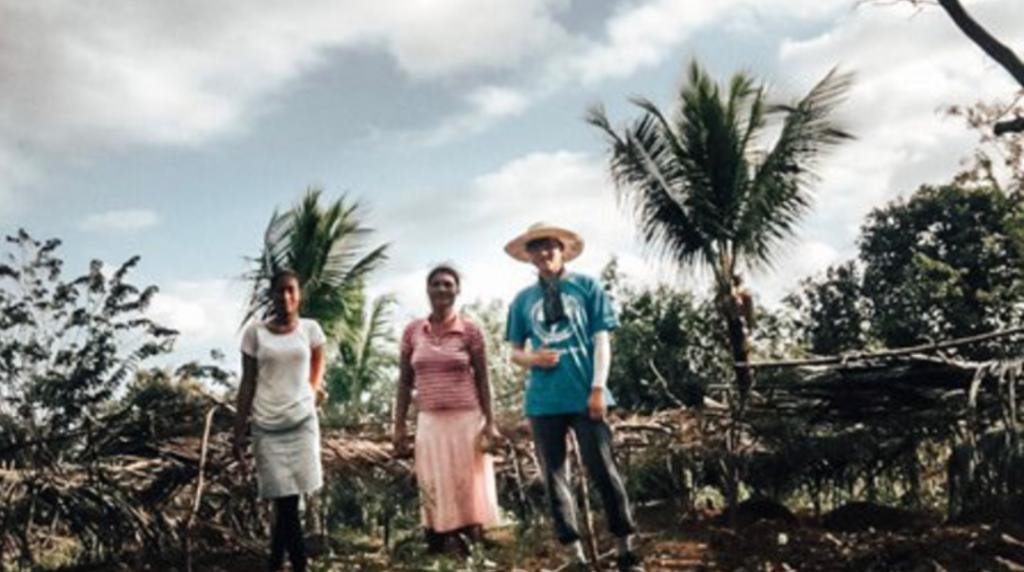
At the same time, there is a community called QuiLombos in the State of Bahia in Brazil where people live on just $1.50 per day. This is the community I have lived in and worked together with for 4 months. The people of QuiLombos could travel into town only once a day if they could afford it. The road is unpaved and that causes a lot of dust to be blown into the air. As we all know, dust is bad for our health. Despite their circumstances, this community appears to be happy.
These days, most children don’t go out and hang out with their friends. They sit around and play with their smartphones. However, the children in QuiLombos hang out with friends outside, they eat fruit from trees, and play soccer. They also have dreams. One day, we asked a child what her dream was. She replied, “I want to be a doctor.” Unfortunately, her circumstances mean that her dream will most likely not come true as she doesn’t have the resources or money to study.
The people that live in this community do not use much water because the region is poor and water is scarce. Water only comes out once a week so they store it and use it until water comes out again. They wash their dishes and shower in the nearby waterfall. Sometimes the pump breaks down and water does not come out at all. Can you imagine living without water? While at the project, we experienced living for 20 days without water. We had to carry water from the waterfall to use. The people who live in this community do not make a lot money. If they want to buy something, they cannot afford it.
As you can see, they do not have the essential things that they should have. If we imagine living without water, poor electricity, inconvenient transportation, and not a lot of food, would we be happy? I think not.
So, are the people of this community happy to live there? We interviewed the community and asked what gave them happiness.
They said:
“Happiness is having peace at home. Being happy with our family, friends, and neighbors as well. If there is no peace, there is no happiness.”
“When we are all united in unity, in agreement, and in peace.”
“I do not want to leave this place because I am at ease here, and I have loved ones.”
They know their happiness. When someone asks you if you are happy, can you say that you are happy?
Happiness is in your mind and money cannot buy happiness. Even though the people of QuiLombos do not have many things and despite their struggles for food security, education and enough water, they are happy because their perspective of happiness is different from ours. Happiness is everywhere, in every moment in time. So why don’t we feel precious and happy from the smallest day to day things?
Happiness gathered today, means there will be a precious tomorrow.
Written by: Choi Gi Woo, Korea