


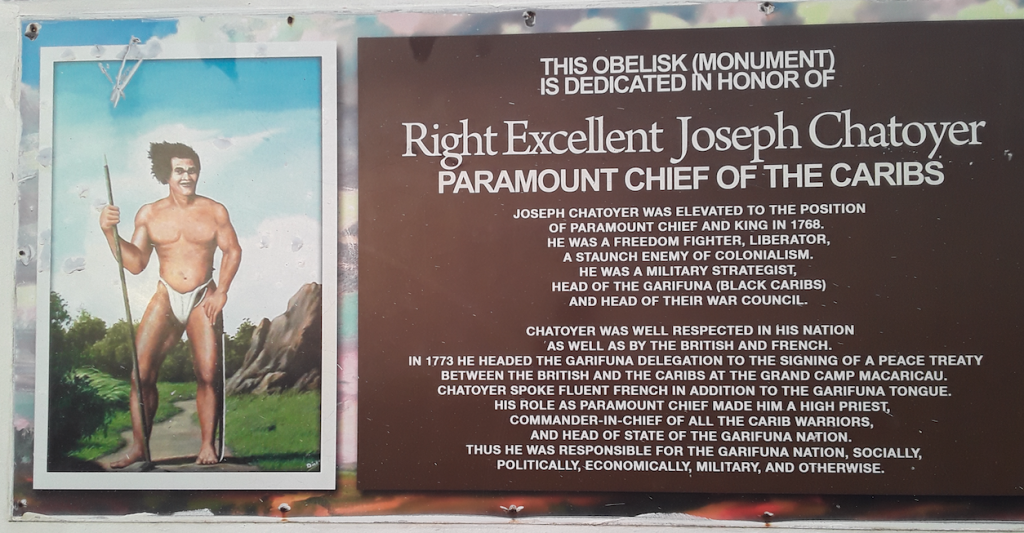
The Garifuna people, also known as Kalinago, holds a significant place in the history and cultural heritage of St. Vincent and the Grenadines, but still only surprisingly few people here are aware of their story and legacy.
Their story is one of cultural fusion, and resistance against colonial oppression. Originating from a blending of African, Indigenous Carib and Arawak ancestry, the Garifuna represent a rich and diverse cultural heritage.
It is important to spread awareness, so the legacy of this unique and complex culture can live on and won’t be forgotten, as a big part of this country’s history. The historical and cultural connection between Africa and the Caribbean is valuable.
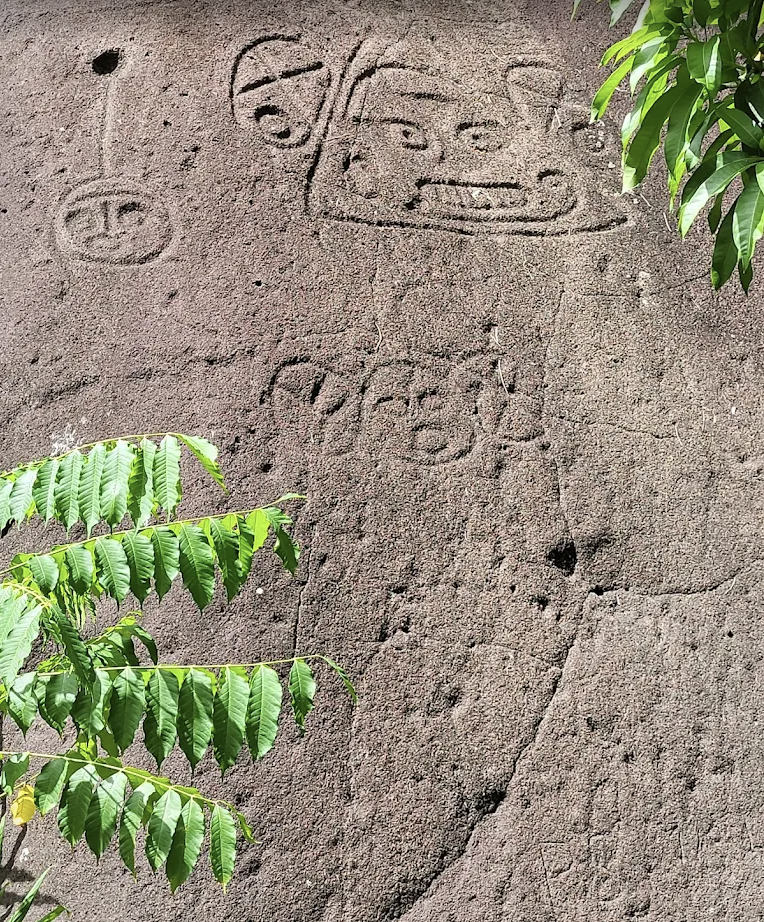 Garifuna Hieroglyphics
My inspiration to write this article came from a striking meeting I had with a Garifuna. Being told about their story really touched me and made me want to know more about the history and culture of the Garifuna.
The Garifuna presence in St. Vincent and the Grenadines can be traced back to the 17th century. During the 18th century, the Garifuna fiercely resisted British and French attempts to colonize St. Vincent which led to the 2 Carib War. Despite their efforts, the British eventually defeated the Garifuna in 1797 after a series of brutal conflicts.
Following their defeat, the British exiled the majority of the Garifuna population (about 5000), as a punishment first to Balliceaux, a small island with infertile ground and no fresh water. Large numbers of Garifuna lost their lives due to these circumstances.
Subsequently the survivors were shifted into exile to the island of Roatán, off the coast of present-day Honduras. From there, the Garifuna spread throughout Central America, including Belize, Guatemala, and Nicaragua.
These Islands that we call Saint Vincent and the Grenadines today, was once known as Yurumein, “land of the blessed “, and birth-land of the Garifuna.
Although today the Garifuna are a minority in St. Vincent and the Grenadines and indigenous communities are almost only located north the Rabacca River, the island of St. Vincent remains a symbolic homeland for the Garifuna people and efforts have been made to preserve and celebrate their heritage.
Garifuna culture is known for its vibrant expressions of music and dance, including the Punta and Parranda styles, which are accompanied by rhythmic drumming and chants.
The Garifuna language, recognized by UNESCO as a Masterpiece of the Oral and Intangible Heritage of Humanity in 2001, reflects the African and Indigenous roots, with influence from French, Spanish and English.
Nowadays, because of the colonization, this language is no longer being spoken in SVG.
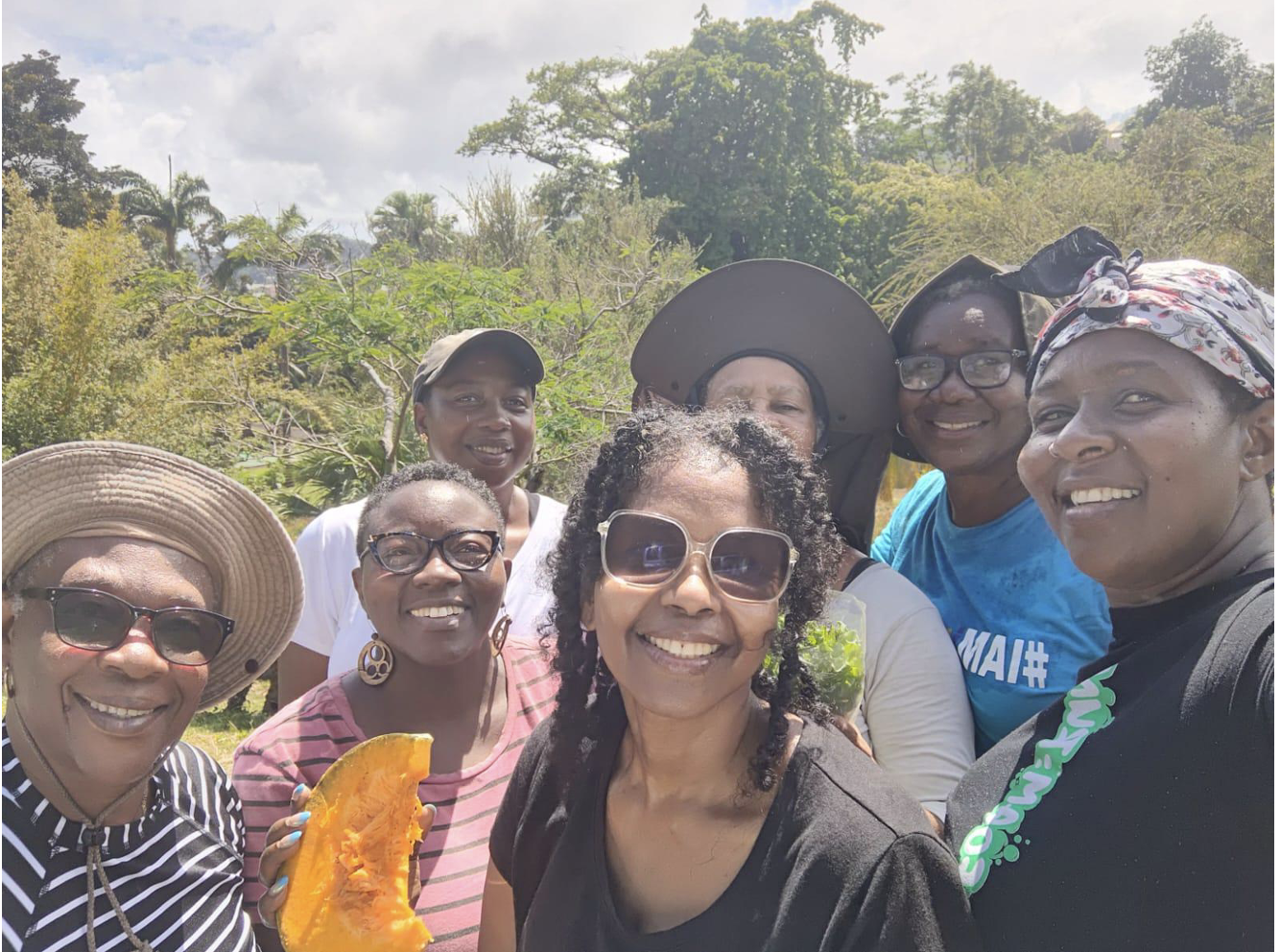 Garifuna female farmers visiting RVA
Their spirituality blends traditional African beliefs with Christianity, often expressed through ceremonies that honor ancestors and celebrate life’s milestones. The face paint they wear is traditionally made by natural ingredients such as Kurkuma, which I got the honor to try myself.
Garifuna literally means “Cassava eating people“. This describes their diet perfectly, as they usually tend to eat a lot of provisions. Wheat is mainly avoided as it is connected to the colonial past and known to be unhealthy.
Instead they use provisions like cassava as a substitute to bake e.g. gluten free bread. In general, the Garifuna feel very connected to the earth and are masters of organic farming.
RVA and the Garifuna have a common interest in spreading the knowledge and experiences on permaculture and sustainable farming.
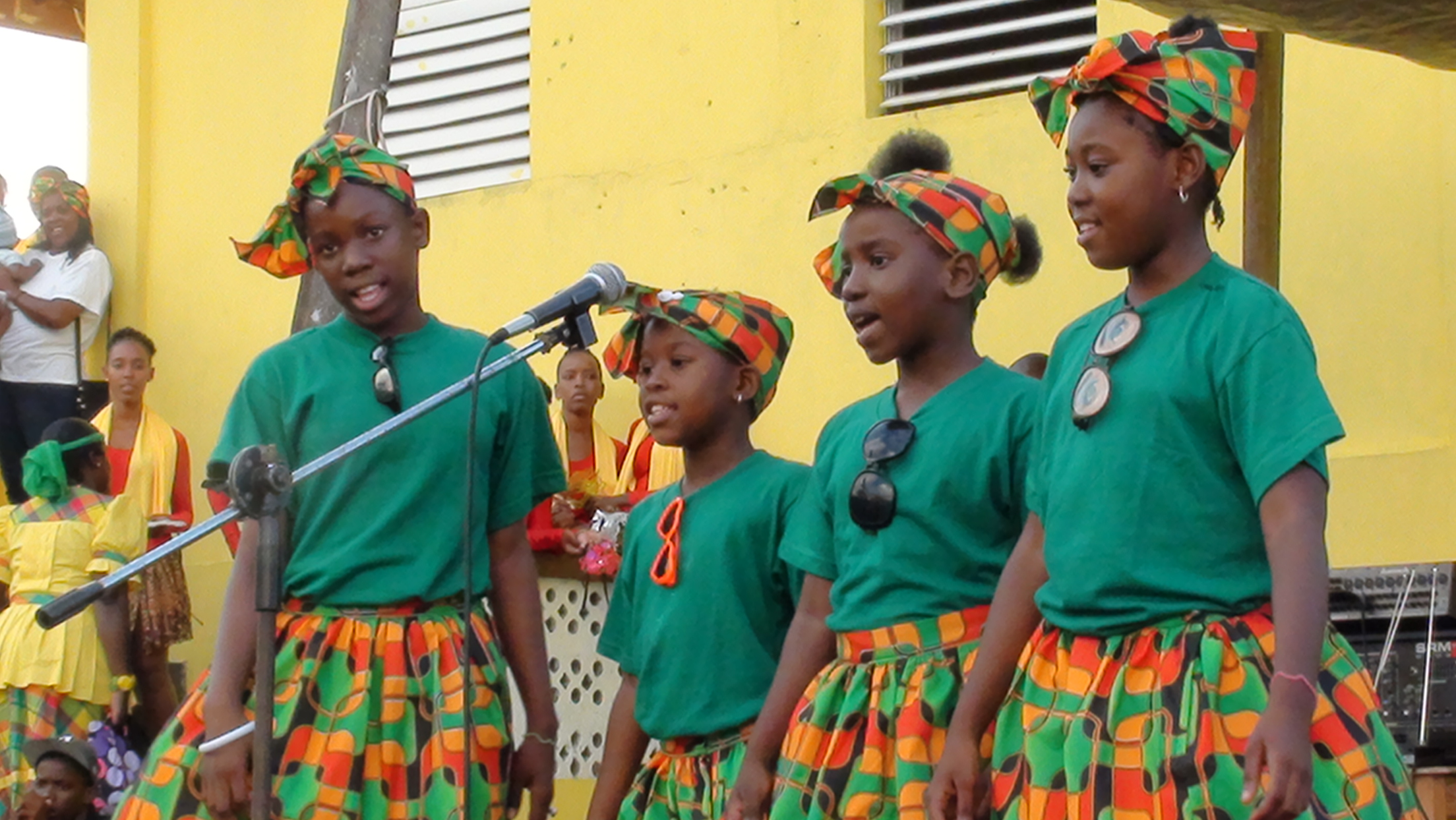 Garifuna Celebration
In recent years, there has been a resurgence of interest in the Garifuna heritage in St. Vincent and the Grenadines. Initiatives like the “Garifuna Indigenous People of St. Vincent and the Grenadines Inc” or other groups like the “Sutherland brothers”, aim to honor their contributions, keep traditions alive and ensure that their story is not forgotten.
The Garifuna’s enduring spirit of resistance, unity, and cultural pride serves as a testament to their remarkable journey and their lasting impact on the history and identity of St. Vincent and the Grenadines.
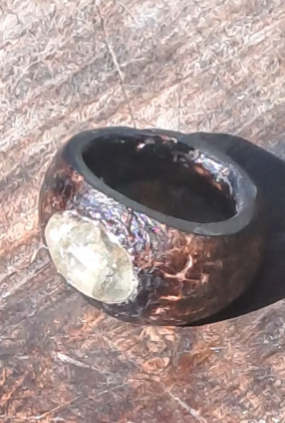
Here is a Garifuna artifact (ring) made from gru gru seed and diamond rock from the volcano.
Andrew and Justin: The Garifuna that I got the honor to meet and my inspiration for this article.
You should definitely pay them a visit in Arnos Vale, where they produce herbal teas, spices and all sorts of gluten free flour.
IG: vincy_teas
tel: +1 784 530-8240

Johanna Slavik, Germany, August 2024 Climate Team