


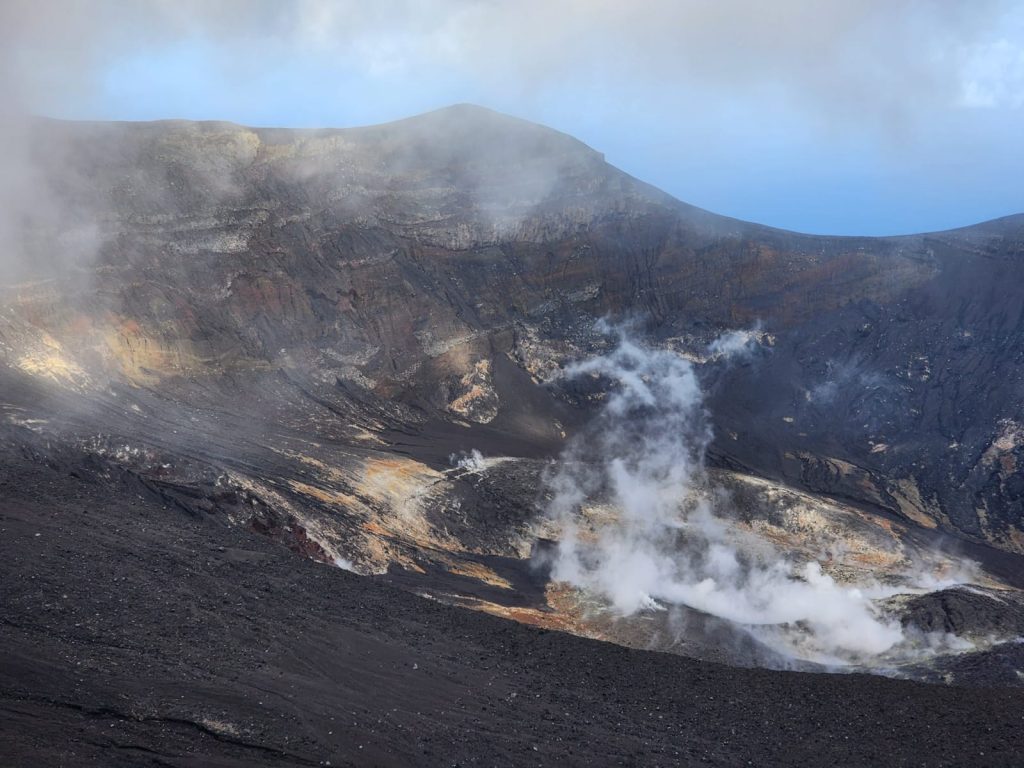
From the grounds of Richmond Vale Academy, the view of La Soufrière is impossible to ignore. Rising quietly above the northern landscape of St. Vincent, she seems calm most days, almost contemplative. For those who live and study here as part of the six-month Climate Compliance program, that view becomes part of daily life, a silent reminder of the powerful forces that shape this island.
But La Soufrière is not just a beautiful presence on the horizon. She is also a storyteller.
In 2021, the volcano reminded the island of her voice.
The mission of the visiting scientists was not to study the volcano alone, but to look beyond the slopes, down to the sea floor, where the hidden consequences of an eruption quietly unfold.
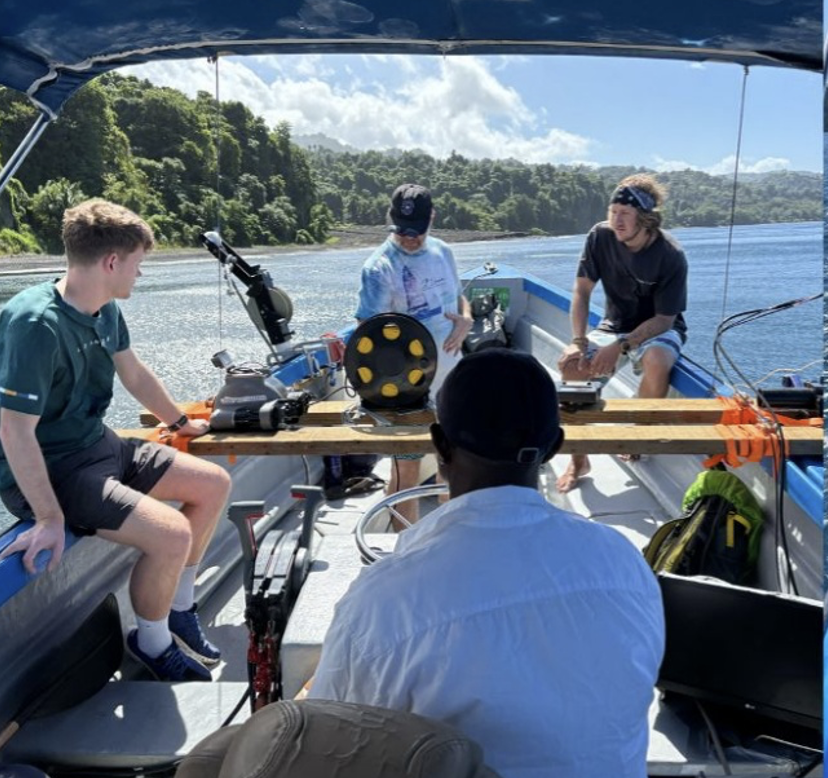
Richmond Vale Academy, located close to the base of the volcano, became the ideal place to host these researchers. From here they could examine a question that matters deeply to St. Vincent and to volcanic islands around the world: what happens beneath the ocean after an eruption, and how does it affect the people who depend on the sea?
For Vincentians, eruptions are not distant historical events.
On April 22, 2021, the volcano sent a plume nearly five kilometers into the sky. Pyroclastic currents surged down the western side of the mountain.
Although this marked the final explosive eruption that month, La Soufrière was not yet finished speaking.
Heavy rainfall followed, washing ash and volcanic debris down the slopes into fast-moving rivers of mud and sediment known as lahars. These flows carried vast amounts of material through river valleys and out toward the ocean.
On May 3rd, the Walibou River became one of the main pathways for this movement. The lahars carried extraordinary volumes of sediment, among the largest ever recorded in similar volcanic events worldwide. While lahars reaching the ocean are not uncommon, scientists have rarely had the opportunity to study what happens after the sediment disappears beneath the water’s surface.
That is where the recent research becomes especially important.
By comparing measurements taken in 2016 with new surveys conducted after the eruption, scientists discovered that parts of the sea floor west of the volcano had risen by as much as 25 meters. Vast quantities of sediment carried from the rivers reshaped the underwater landscape, forming new deltas where the rivers meet the sea.
For a country like St. Vincent and the Grenadines, where fishing plays a vital role in both culture and economy, these changes matter deeply. Five important fishing and nesting areas west of the volcano were significantly affected when lahars carried sediment into the sea.
Yet, research like this also represents an opportunity to better understand how volcanic events shape marine environments and to help communities adapt to those changes.
Without the visiting scientists who came to Richmond Vale Academy, many of these underwater stories might have remained hidden. Their work has opened a window into how eruptions like La Soufrière’s ripple far beyond the mountain itself.
St. Vincent offers a rare place where people can witness these forces of nature up close, where volcano, river, and ocean are all part of the same living system.
And the story is not finished.
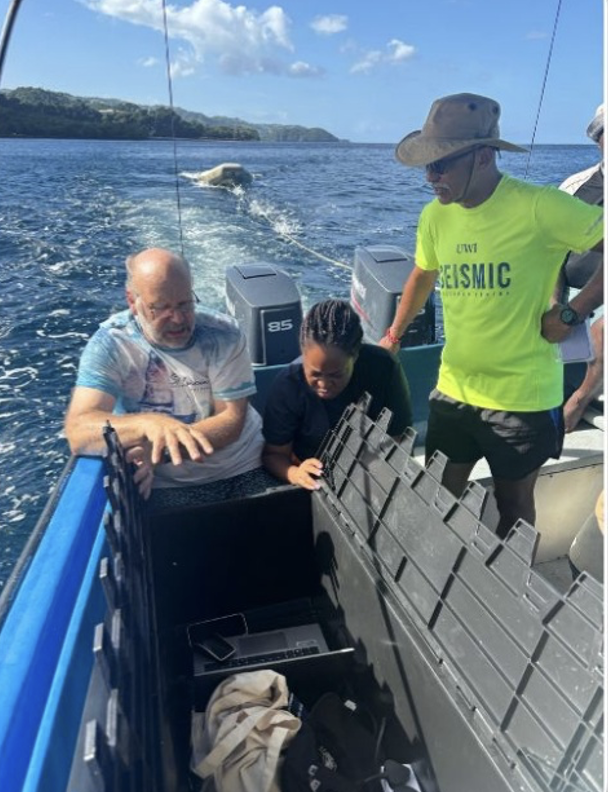
In April 2026, the same six scientists will return, joined by seven more colleagues, to continue this research. Working together with the Ministry of Fisheries, they will further explore how volcanic activity affects the marine environment and the livelihoods of the fishermen who depend on it.
La Soufrière may appear quiet again today, watching over the island as she has for centuries. But beneath the surface, both on land and in the sea. her story continues to unfold.
Mai Jones UK, Climate Team November 2025.