


During the six months I lived in Malawi as an international humanitarian volunteer, food insecurity ceased to be an abstract concept discussed in classrooms and became part of my daily reality. Through field activities, weekly visits to local markets, and close engagement with refugee communities – especially in the Dzaleka camp, I witnessed how limited access to nutritious food shapes the everyday lives of thousands of families. In this context, food insecurity goes far beyond the mere absence of food; it encompasses low dietary diversity, insufficient nutritional quality, and unstable access, all of which directly affect health, dignity, and future prospects.
Recent data from the World Food Programme (WFP) highlight the severity of this situation. Malawi has experienced a significant increase in malnutrition-related hospitalizations, particularly cases of Moderate Acute Malnutrition (MAM), which rose sharply between 2024 and 2025. Although humanitarian assistance plays a crucial role, many Malawian and refugee families remain highly vulnerable, relying on repetitive and nutritionally limited diets.
What Goes on the Table
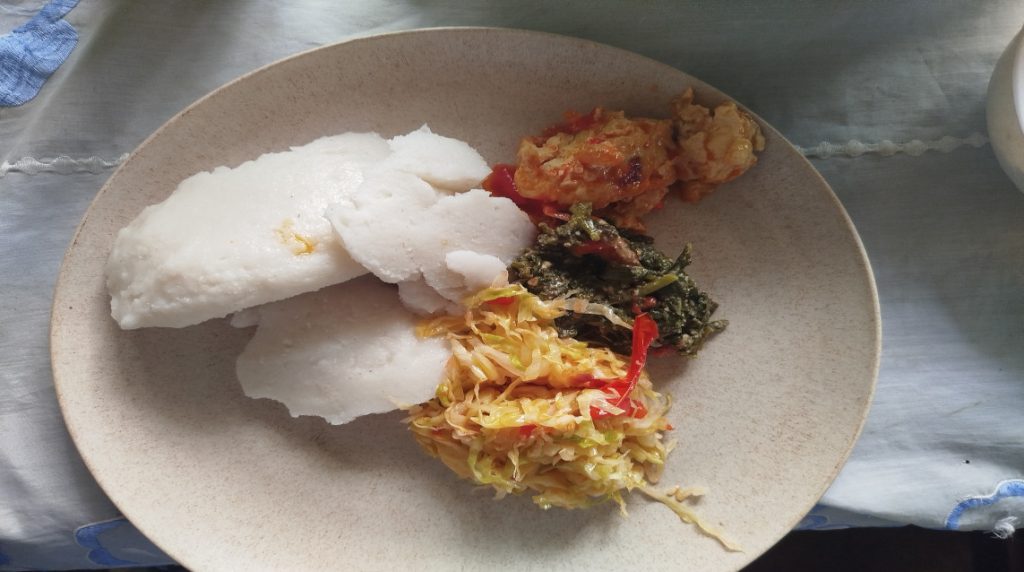
For most Malawian households, nsima (a maize-based porridge) is the central element of daily meals, usually accompanied by leafy vegetables, beans, eggs, or dried fish. Meat, fruit, and dairy products are rarely part of everyday diets due to their high cost and are typically consumed only on special occasions. As one local resident explained:
“Most of our diet depends on maize. It fills us up, but it is not balanced. We do not eat fruits, milk, or meat very often.”
Among refugees, similar patterns persist. Despite receiving small monthly cash transfers from the WFP families still struggle to meet their nutritional needs:
“It’s a bit better than before, but honestly, it’s still not enough and not always nutritious.”
These testimonies reveal both resilience and fragility. Food often serves merely as a means of survival rather than a pathway to health and well-being, perpetuating chronic food insecurity and limiting children’s development.
The Cost of Eating Well
Access to a nutritious diet in Malawi has become increasingly difficult due to rising food prices and structural challenges. El Niño–related droughts severely affected agricultural production, while inflation and logistical constraints (such as recurring fuel shortages) further reduced households’ purchasing power. Maize prices remained high throughout 2025, and basic items such as sugar or cooking oil were often unavailable in local markets.
As one refugee noted
“Food prices have gone up a lot. Sometimes we have to reduce the amount we buy or choose cheaper, less nutritious options.”
These fluctuations directly undermine food dignity, forcing families to make constant sacrifices that compromise dietary quality and long-term health.
A Call to Action
My experience in Malawi allowed me to connect theory with practice. Working directly in rural and school-based initiatives – such as supporting building school gardens, education activities, and community engagement – I observed how small, locally grounded actions can generate meaningful impact. These initiatives contributed not only to improving access to food but also to raising awareness about balanced diets and strengthening local capacities.
At the same time, volunteering proved to be a two-way street. While supporting vulnerable communities in addressing food insecurity, I went through a profound process of self-discovery, continuous learning, and personal growth. Being in the field, engaging with different realities, and building relationships grounded in respect became a unique experience – one that transforms not only the contexts where one works, but also the individual who chooses to engage. Ultimately, strengthening food security in Malawi is about restoring dignity to families and creating opportunities for sustainable futures. Every initiative (whether in agriculture, education, or community development) represents a seed planted for long-term change.
I invite you readers and future volunteers to reflect on your own role in this process. By engaging in humanitarian action, supporting local initiatives, or sharing knowledge and skills, each person can become an agent of social transformation. Real impact begins with commitment, empathy, and the willingness to act.
Salatiel Marinho, Brazil, April Africa Team 2025.